

Aswan Excursions – The Most Beautiful Sights & Tours
Aswan excursions offer unforgettable experiences between ancient temples, Nubian culture, and majestic Nile landscapes. Egypt’s southernmost city enchants with the legendary Abu Simbel, colorful islands, and authentic charm. Experience the perfect blend of history, culture, and natural beauty.
Why Aswan is an Essential Destination in Egypt
Aswan is considered Egypt’s most relaxed and charming city. While Cairo impresses with its hustle and Luxor with its monumentality, Aswan captivates through a unique atmosphere of tranquility. The city lies picturesquely at the first Nile cataract, where massive granite rocks emerge from the water and white sailboats, the traditional feluccas, glide gently across the river.
Nubian culture profoundly shapes the region. The colorful houses, the friendly people with their dark complexion, and the relaxed lifestyle create an atmosphere distinctly different from the rest of Egypt. Nubians are known for their hospitality, their vibrant music culture, and their centuries-old traditions, which they have preserved despite relocation due to the construction of the Aswan Dam.
The climate in Aswan is pleasantly warm even in winter, making the city an ideal travel destination, especially between October and April. The humidity is lower than in Cairo or Luxor, making even high temperatures more bearable. Winters are mild with daytime temperatures around 25 degrees Celsius, while evenings become pleasantly cool.
Aswan serves as the perfect starting point for some of Egypt’s most spectacular excursions. From here you can reach Abu Simbel, start or end Nile cruises, and comfortably explore the surrounding temples and attractions. The city itself is manageable and can be easily discovered on foot or by carriage.
Abu Simbel – The Absolute Highlight of Aswan Excursions
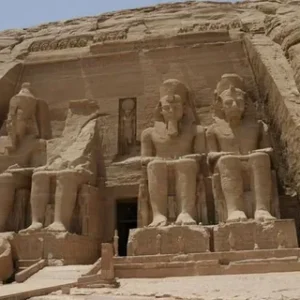
Abu Simbel is undoubtedly the highlight of any Aswan visit. The two massive temples that Pharaoh Ramses II had carved into the rock over 3,200 years ago are among the most impressive monuments in world history. The facade of the great temple is dominated by four colossal seated statues of the pharaoh, each over 20 meters high and carved directly from the rock.
The sight of these gigantic statues is overwhelming. Ramses II, one of the most powerful pharaohs of the New Kingdom, had this temple built to demonstrate his power and impress the Nubian peoples to the south. Between the legs of the statues stand smaller figures of the royal family, and on the sides are captured enemies – a clear demonstration of power.
The interior of the temple is equally impressive. The pillared hall with eight Osiris pillars leads through several chambers to the sanctuary, where four god statues are enthroned: Ptah, Amun-Re, the deified Ramses II, and Re-Horakhty. Twice a year, on February 22 and October 22, an astronomical wonder occurs: the first rays of sunlight penetrate 60 meters deep into the temple and illuminate three of the four statues. Only Ptah, the god of darkness, remains in shadow.
The Small Temple of Nefertari
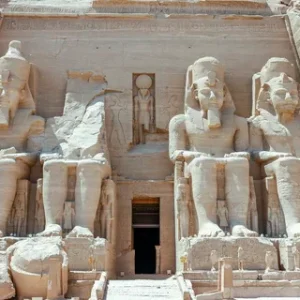
Next to the great temple stands a smaller but no less impressive temple that Ramses II dedicated to his favorite wife Nefertari and the goddess Hathor. The facade shows six standing colossal statues – four of Ramses and two of Nefertari, all equal in size, which was extremely unusual and underscores the pharaoh’s great love for his consort.
The interior of the temple is decorated with beautiful reliefs showing Nefertari making offerings to the gods. The colors are amazingly well preserved and shine in the colors of ancient Egyptian art: red, blue, yellow, and green. The ceiling is decorated with stars representing the goddess Nut, the sky goddess.
The Rescue of Abu Simbel
One of the greatest archaeological achievements of the 20th century was the rescue of Abu Simbel. When the Aswan Dam was built in the 1960s, the temples threatened to sink in the emerging Lake Nasser. An international UNESCO campaign mobilized experts from around the world. The two temples were dismantled into over 1,000 blocks, each weighing up to 30 tons, and rebuilt 65 meters higher on an artificial mountain – a technical masterpiece that took four years.
Getting to Abu Simbel
Travel to Abu Simbel usually occurs in three ways. The most popular option is the day trip by bus, which starts very early in the morning at 4 AM. The drive through the desert takes about three to four hours. You travel in a convoy for security reasons and reach Abu Simbel in time for sunrise, when the temples glow in golden light.
A more comfortable but more expensive alternative is the flight from Aswan to Abu Simbel. The flight takes only 30 minutes and offers spectacular views of Lake Nasser. You have about two to three hours for sightseeing before flying back. This option is ideal for travelers with limited time or health restrictions.
The third option is an overnight stay in Abu Simbel, which only few tourists choose. This allows you to visit the temples leisurely in the afternoon when most tourists have left, and visit again the next morning. The late afternoon light is particularly beautiful for photographers.
Philae Temple – Jewel on the Island
The Goddess Isis and Her Sanctuary
The Philae Temple, dedicated to the majestic goddess Isis, is one of Egypt’s most beautiful and romantic temple complexes. The complex is located on Agilkia Island in Lake Nasser and can only be reached by boat, making the visit a special experience. The short boat ride across the sparkling water sets the mood for the temple’s mystical atmosphere.
Isis was one of the most important goddesses of the ancient Egyptian pantheon – goddess of magic, motherhood, and healing. Her cult survived even the end of the pharaonic era and was still practiced in Roman times. The Philae Temple was the last center of ancient Egyptian religion and was only closed in the 6th century AD.
Architectural Beauty
The temple complex captivates through its harmonious architecture and excellent preservation. You enter the complex through a monumental pylon, whose walls are decorated with huge reliefs showing the pharaoh smiting enemies. Behind it extends an open courtyard surrounded by colonnades with various column capitals – each a work of art in itself.
The Mammisi, the birth house, is a special highlight. Here the mythical birth of Horus, son of Isis and Osiris, is depicted. The reliefs show intimate scenes of the divine family and are of exceptional artistic quality. The color remnants preserved in some places give an impression of how magnificent these temples once looked.
The Rescue Operation and Sound and Light Show
Like Abu Simbel, the Philae Temple was also saved from the floods of the Aswan Dam. The entire complex was relocated between 1972 and 1980 from Philae Island to the higher Agilkia Island. The work was technically demanding as the temples first had to be surrounded by a dam to work in dry conditions.
In the evening, a spectacular sound and light show takes place at Philae, telling the story of the temple and the goddess Isis. Colored lights illuminate the columns and reliefs while a dramatic narration brings the mythological and historical significance of the place to life. The show is offered in various languages, including English, and is an unforgettable experience you shouldn’t miss.
The Unfinished Obelisk – Insight into Ancient Masonry
In Aswan’s northern quarry lies one of Egypt’s most fascinating archaeological finds: the Unfinished Obelisk. With a length of about 42 meters and an estimated weight of 1,200 tons, it would have been the largest obelisk ever carved – almost twice as heavy as any other known obelisk.
The obelisk was never completed because cracks appeared in the granite during work. The ancient stonemasons had to abandon the project, and the gigantic stone block remained connected to the bedrock on three sides. For modern archaeologists, this is a stroke of luck, as nowhere else can ancient stone-working techniques be studied so well.
Visitors can walk along the obelisk and clearly see the processing marks. The Egyptians used dolerite balls, extremely hard stones, with which they laboriously worked the granite by hand. Thousands of workers rhythmically hammered on the stone to shape it. It’s estimated that work on this obelisk would have taken several years.
Visiting the quarry conveys deep respect for the technical abilities and incredible perseverance of ancient Egyptian craftsmen. Here it becomes clear that Egypt’s monumental structures were not created through extraterrestrial help or lost high technology, but through human labor, skill, and patience.
Nubian Villages – Experiencing Authentic Culture
Gharb Soheil – The Picturesque Island Village
A visit to a Nubian village is one of the most authentic experiences in Aswan. The village of Gharb Soheil on an island in the Nile is particularly popular with tourists, yet has largely preserved its original character. The houses are painted in bright colors – blue, yellow, orange, and green – giving the settlement a cheerful, vibrant appearance.
Nubians have a rich tradition of house painting. The walls are not just monochrome but often decorated with traditional motifs: geometric patterns, palm trees, crocodiles, and depictions of the pilgrimage to Mecca. These artworks tell stories and show the residents’ pride in their culture and religion.
Nubian Hospitality
During a village visit, you’ll be received in a traditional Nubian house. The hosts offer you hibiscus tea (karkadeh), a refreshing red drink served cold or hot. This is often accompanied by homemade bread and local specialties. Nubians are extraordinarily hospitable and proud to share their culture with visitors.
In many houses, you’ll see crocodiles – though no longer alive, but as mummified souvenirs or as tame pets (usually juveniles). In Nubian tradition, crocodiles were considered sacred animals that brought protection. Today they’re more of a tourist attraction, but the connection to these reptiles is culturally deep-rooted.
Nubian Handicrafts
Nubian villages are excellent places to buy authentic handicrafts. Particularly beautiful are the hand-woven baskets with colorful geometric patterns, made from palm leaves. Each pattern has meaning and is unique. Nubian jewelry, especially necklaces and bracelets made from colorful beads, are also popular souvenirs.
Prices in the villages are often fairer than in the tourist bazaars of Luxor or Cairo, as you’re buying directly from the craftsmen. However, bargaining is still customary and should be done respectfully and with a smile. Remember that your purchase directly supports these families’ income and contributes to preserving traditional craft techniques.
The Aswan Dam – Technical Masterpiece
The High Dam and Its Significance
The Aswan High Dam, completed in 1970, is one of the 20th century’s largest engineering projects. With a height of 111 meters, a length of 3,830 meters, and a width of almost one kilometer at the base, it’s an impressive construction. The dam creates the massive Lake Nasser, which extends over 500 kilometers south into Sudan.
The structure has fundamentally changed Egypt. It controls the annual Nile floods, which although bringing fertile silt, were often devastating. The dam enables year-round irrigation and makes multiple harvests per year possible. The twelve turbines of the power plant generate about half of Egypt’s electricity needs.
Controversies and Ecological Impacts
Despite its advantages, the dam also had negative impacts. Over 100,000 Nubians had to leave their ancestral villages, which sank in the emerging lake. They were resettled in newly built settlements north of Aswan, but lost their homeland and many of their traditions. This tragedy still shapes the Nubian community today.
Ecologically, the dam led to significant changes. The fertile Nile silt is now retained in the lake, making the use of artificial fertilizer necessary. Fish stocks in the Mediterranean have declined as fewer nutrients arrive. Additionally, salinization increasingly threatens agricultural areas as constantly standing water rises.
Visiting the Dam
Visiting the dam itself is free and offers impressive views of the massive Lake Nasser and the endless desert landscape. On the dam crest is a lotus-shaped monument commemorating Egyptian-Soviet cooperation during construction (the Soviet Union significantly financed and supported the project). From here you can also see the older British Aswan Dam from 1902.
Photography is allowed at the dam, although there are restrictions in certain areas for security reasons. The best time for a visit is late afternoon when the light becomes softer and temperatures more bearable.
Felucca Ride – Romance on the Nile
A ride on a felucca, the traditional Egyptian sailboat, is an absolute must in Aswan. These elegant boats with their large triangular sails glide silently across the water and offer a peaceful perspective on the city and surrounding landscape.
The best time for a felucca ride is late afternoon until sunset. The light becomes golden, temperatures more pleasant, and you experience the magical moment when the sun sinks behind the desert hills and paints the sky in spectacular colors. Many felucca captains are Nubians who sing traditional songs during the ride and tell stories about the Nile.
A typical felucca ride lasts between one and two hours. The route often goes around Elephantine Island, past the Botanical Garden on Kitchener’s Island, and offers views of the Aga Khan Mausoleum, which stands high on a hill on the western bank. Some tours include a stop on an island for tea and relaxation.
For the truly adventurous, there are also multi-day felucca trips from Aswan to Luxor or vice versa. These leisurely journeys take two to three days, you sleep on board or on shore under the starry sky, and experience the Nile in the most original way. It’s a simple but incredibly romantic way to travel.
Elephantine Island – Archaeology and Nature
Elephantine Island is the largest island near Aswan and a fascinating destination for history enthusiasts. The name probably comes from the elephant-shaped granite rocks on the shore or from the fact that ivory was once traded here. The island has been inhabited since prehistoric times and played an important role as a border post between Egypt and Nubia.
On the island are extensive archaeological excavations documenting various epochs. The Temple of Khnum, the ram-headed creator god, is partially reconstructed and conveys an impression of the island’s religious significance. A Nilometer, an ancient device for measuring the Nile water level, is particularly well preserved and shows the importance of the Nile flood for Egyptian civilization.
The Aswan Museum on the island houses a collection of artifacts from the region, including mummified rams sacred to the god Khnum, and finds from various epochs. Particularly interesting is the Nubian section, which documents the culture of the region’s original inhabitants.
The southern part of the island is still inhabited by two Nubian villages, whose colorful houses provide a beautiful contrast to the ancient ruins. A walk through these villages offers authentic insights into daily life and the opportunity to drink tea in local cafés and enjoy the relaxed atmosphere.
Kitchener’s Island – The Botanical Garden
Kitchener’s Island, also known as Geziret el-Nabatat (Plant Island), is a green paradise in the middle of the Nile. The small island was gifted to British General Horatio Kitchener in the late 19th century, who established a botanical garden there. Today the garden is publicly accessible and a popular destination for a relaxed afternoon excursion.
The garden houses exotic plants from around the world, especially from Africa and Asia. Shaded palm avenues, fragrant flower beds, and rare trees create an oasis of tranquility. For birdwatchers, the island is a paradise, as numerous native and migratory birds nest in the trees.
Access to the island is only by boat. Many combine the visit with a felucca ride, making the journey part of the experience. On the island there are shaded places for picnicking and relaxing – bring a blanket and snacks. There’s also a small café offering refreshments.
The Aga Khan Mausoleum
High on a hill on the western Nile bank rises the imposing mausoleum of Sir Sultan Muhammad Shah, the Aga Khan III, spiritual leader of Ismaili Muslims. The building in Fatimid architectural style is constructed from pink sandstone and stands out with its elegant dome.
The Aga Khan III loved Aswan and spent many winters here. After his death in 1957, he was buried in this specially erected mausoleum. His widow, the Begum Aga Khan, visited the grave daily and laid a fresh rose on it as long as she was in Aswan – a tradition that became legend.
The mausoleum is not accessible to the public but can be admired from outside. The ascent is strenuous, especially in the heat, but is rewarded with spectacular views of Aswan, the Nile, and the surrounding desert. It’s best to visit the mausoleum in late afternoon when the light bathes the facade in warm gold.
Below the mausoleum are the Tombs of the Nobles, rock-cut tombs from the Old and Middle Kingdoms. These are accessible and offer interesting insights into the burial culture of ancient Egypt’s elite from Elephantine.
Kalabsha Temple and Other Temples at Lake Nasser
The Kalabsha Temple is Nubia’s largest freestanding temple and, like many other monuments, was saved from the floods of Lake Nasser. The temple dedicated to the god Mandulis dates from Roman times and impresses with its well-preserved reliefs and harmonious architecture.
The journey to Kalabsha Temple crosses Lake Nasser and takes about 30 minutes from Aswan. The surroundings are spectacular – the turquoise water contrasts with the golden desert, and the silence is broken only by the boat’s engine noise. Upon arrival, you can explore the temple in relative solitude, as few tourists come here.
Near Kalabsha Temple are two other smaller temples: Beit el-Wali, a rock temple of Ramses II with lively battle scenes, and the Kiosk of Qertassi with its elegant columns. All three were relocated to this location and now form an archaeological ensemble.
For those particularly interested, a longer tour to more distant temples at Lake Nasser like Wadi es-Sebua, Amada, and Qasr Ibrim is worthwhile. These excursions usually take a full day and require special permission, but offer the opportunity to see temples that hardly any tourist visits.
Practical Information for Your Aswan Excursions
Best Time to Visit Aswan
The optimal travel time for Aswan is from October to April. During these months, temperatures are pleasant, with daytime values between 20 and 30 degrees Celsius. Nights can become cool in winter, especially in December and January, so bring a light jacket.
The summer months from May to September are extremely hot with temperatures regularly exceeding 40 degrees. Sightseeing is then very strenuous and should be limited to early morning hours. However, during this time prices are significantly lower and tourist crowds considerably smaller.
Duration of Stay in Aswan
For a comprehensive visit to Aswan, you should plan at least two to three full days. The first day can be dedicated to sights in and around Aswan: Philae Temple, Unfinished Obelisk, Dam, felucca ride, and Nubian village. The second day is ideal for the excursion to Abu Simbel. A third day allows for more relaxed exploration or additional excursions like to Kalabsha Temple.
Accommodation in Aswan
Aswan offers accommodations for every budget. The legendary Old Cataract Hotel, where Agatha Christie wrote parts of her novel “Death on the Nile,” is the most luxurious option with breathtaking Nile views. Modern alternatives are the Sofitel Legend or the Mövenpick Resort on Elephantine Island.See also.
For medium budgets, there are numerous good three- and four-star hotels along the Corniche, the waterfront promenade. Budget travelers find simple but clean hostels and guesthouses, often with roof terraces and great Nile views. Many accommodations offer complete services for organizing excursions.
Transportation and Getting Around
Aswan is small enough to explore on foot, at least the area along the Corniche. For longer distances, taxis are available, which you can hire for individual trips or by the day. Always agree on the price in advance.
Traditional horse-drawn carriages (caleches) are a romantic way to explore the city. A ride along the Corniche at sunset is a lovely experience. Here too, you should negotiate the price beforehand.
For excursions to sights outside the city, it’s best to book organized tours through your hotel or a local tour operator. This is often cheaper and more convenient than individual organization.
Safety and Health
Aswan is considered a very safe city for tourists. The crime rate is low, and people are friendly and helpful. Nevertheless, you should observe the usual precautions: leave valuables in the hotel safe, prefer busy areas at night, and watch your bags.
Health-wise, the biggest challenge is the heat, especially in summer. Drink plenty of water, wear sunscreen and a hat, and avoid exertion during midday heat. Tap water should not be drunk – use bottled water.
Frequently Asked Questions About Aswan Excursions
Is the early start for the Abu Simbel excursion really worth it?
Yes, the early 4 AM start is absolutely worth it! You reach Abu Simbel in time for sunrise, when the first rays bathe the temple facades in magical golden light – this is the most photogenic and atmospheric moment of the day. Additionally, temperatures are still bearable in the morning, making the visit much more pleasant. By midday when the heat increases, you’re already on the return journey. The early departure means a short night, but most travelers sleep in the comfortable bus and are refreshed upon arrival. The three to four hours on-site are completely sufficient to visit both temples leisurely and take unforgettable photos.
Can I participate in a felucca ride as a non-swimmer?
Of course! Felucca rides are completely safe and suitable for all age groups, regardless of swimming abilities. The boats are stable and sail on calm Nile sections close to shore. There are no dangerous currents or situations where you could fall into the water. The captains are experienced and know the river perfectly. If you’re still unsure, simply wear a life jacket – most feluccas have them on board. The ride is relaxed and leisurely, you sit on cushions in the boat and enjoy the view. Many families with small children and elderly people participate in felucca rides, which underscores their safety.
Which Aswan excursions are suitable for elderly travelers or people with limited mobility?
Several Aswan excursions are well suited for travelers with limited mobility. Philae Temple is relatively level and accessible, although you must board and disembark from the boat. The High Dam is completely barrier-free and reachable by car. Felucca rides are relaxed but require some agility when boarding. For Abu Simbel, the flight instead of the bus trip is recommended – significantly more comfortable and less exhausting. The temples themselves have some stairs, but the terrain is manageable. The Unfinished Obelisk requires some walking on uneven quarry terrain. Nubian village visits are usually relaxed with short walking distances. Generally, I recommend booking a private guide and driver who can adjust the pace to your needs and provide assistance when needed.
How much should I budget for tips on Aswan excursions?
Tipping (baksheesh) is culturally ingrained in Egypt and expected. For a day trip to Abu Simbel with bus and guide, calculate about 3-5 euros for the bus driver and 5-10 euros for the guide, depending on service quality and group size. For the felucca ride, 2-5 euros for the captain is appropriate, especially if he sang or told stories. At Philae Temple and other sights, boat operators expect about 1-2 euros. In restaurants, 10% of the bill is customary. For restroom attendants, photo helpers, and similar small services, 0.50-1 euro is sufficient. Always keep small bills and coins ready, ideally Egyptian pounds, but small euro or dollar bills are also gladly accepted. Don’t overdo it, but be fair – many people live from these tips.
Are there Aswan excursions specifically interesting for photographers?
Absolutely! Aswan is a dream destination for photographers. The best photo time is sunrise at Abu Simbel – the side lighting perfectly models the temple statues. For landscape photographers, the felucca ride at sunset offers fantastic subjects with white sails against the colored sky and desert hills. The Unfinished Obelisk is best photographed at noon when the sun directly highlights the stone’s textures from above. Nubian villages with their colorful houses are photogenic at any time of day, particularly beautiful in late afternoon. For night photography, the sound and light show at Philae Temple is ideal. Bring a tripod for long exposures. Drone photography is prohibited at most locations, inform yourself beforehand. Always respect people and ask permission before photographing persons, especially in Nubian villages.
What cultural particularities should I observe on Aswan excursions?
Respectful clothing is important, especially outside hotels. Shoulders and knees should be covered, this is particularly relevant for temple visits. In Nubian villages, you’re a guest in a private living area – behave respectfully accordingly. Always ask permission before photographing people or their property. Remove your shoes when entering a Nubian house. Declining offers (tea, food) can be perceived as rude – take at least a symbolic sip. During the felucca ride, it’s customary for the captain to sing – show your appreciation through applause or tips. Bargaining at markets is expected, but remain friendly and respectful. Public displays of affection between couples should remain discreet. During Ramadan, don’t eat or drink demonstratively in public during the day, show consideration for those fasting.
Can you undertake a multi-day desert safari from Aswan?
Yes, various desert safaris are offered from Aswan, ranging from day tours to multi-day expeditions. Popular destinations are the Nubian Desert with its spectacular sand dunes and rock formations. Multi-day tours often lead to the Gilf Kebir Plateau, famous from “The English Patient,” or to the White Desert with its surreal limestone formations. These tours are adventures for nature lovers and require a certain physical fitness. You sleep in tents under the starry sky, which is an unforgettable experience. The best time for desert safaris is from October to April when temperatures are bearable. Book only with established, licensed operators with experienced guides. Multi-day safaris are not cheap, but the experience is unique. For the less adventurous, there are day tours by jeep to nearby desert landscapes that provide an impression without great hardship.
Are Aswan excursions also recommended during Ramadan?
Aswan excursions are generally possible during Ramadan and even have special charms. The sights are often less crowded as fewer Egyptian domestic tourists are traveling. All tourist attractions and excursions continue to operate normally. However, you should note some particularities: many restaurants and cafés outside hotels are closed during the day or serve only discreetly. Hotels have normal service, but be discreet when eating and drinking in public. The mood at sunset (Iftar) when the fast is broken is particularly festive – try to experience this at an Iftar buffet in your hotel. Some services may be slower as fasting people have less energy. In the evenings after sunset, the atmosphere is very lively, shops stay open longer. Overall, Ramadan can be a culturally enriching travel time if you travel with respect and flexibility.


Comment (0)