

Desert Safari Hurghada: Your Ultimate 2026 Guide to Egypt’s Eastern Desert Adventure
Experience the thrill of a desert safari in Hurghada with quad biking, camel rides, Bedouin village visits, and stunning sunset views. This comprehensive guide covers everything you need to know about desert safari tours, prices, what to expect, and insider tips for an unforgettable Egyptian desert adventure.
Introduction to Desert Safari Hurghada
A desert safari in Hurghada offers one of Egypt’s most exhilarating and culturally rich experiences, taking you beyond the beautiful beaches of the Red Sea into the vast, mysterious expanse of the Eastern Desert. This adventure combines heart-pounding activities with authentic cultural encounters, creating memories that rival even the most spectacular underwater experiences Hurghada is famous for.
The Eastern Desert surrounding Hurghada presents a landscape of dramatic contrasts—golden sand dunes, rocky mountain ranges, and endless horizons that seem to stretch into infinity. This ancient terrain has witnessed thousands of years of history, from Pharaonic trade routes to Bedouin tribes who have called these harsh lands home for generations.
What makes a Hurghada desert safari particularly special is its perfect blend of adventure and authenticity. You’ll experience the adrenaline rush of quad biking across sand dunes, the timeless tradition of camel riding, the warmth of Bedouin hospitality, and the breathtaking beauty of desert sunsets that paint the sky in impossible shades of orange, pink, and purple.
Whether you’re seeking adventure, cultural immersion, photography opportunities, or simply a break from beach activities, a desert safari delivers an experience that showcases a completely different side of Egypt. The silence of the desert, the simplicity of Bedouin life, and the raw beauty of the landscape create a profound connection with nature and history that stays with you long after you’ve returned to your hotel.
Types of Desert Safari Tours in Hurghada
Desert safari operators in Hurghada offer various tour packages designed to suit different preferences, schedules, and budgets. Understanding the options helps you choose the experience that best matches your interests and travel style.
Quad Biking Safari Tours represent the most popular option, focusing primarily on the thrill of driving all-terrain vehicles across desert terrain. These tours typically last 3-4 hours and include pickup from your hotel, transportation to the desert base, safety briefings, quad bike rental, and guided rides through dunes and valleys. Most tours include a stop at a Bedouin village for tea and a brief cultural experience before returning to Hurghada.
Sunset Desert Safari tours time their activities to culminate with viewing the spectacular desert sunset from a scenic vantage point. These excursions usually depart in the late afternoon, allowing you to experience the desert during the magical golden hour when the harsh midday light softens into warm, glowing tones that make the landscape even more beautiful. Sunset tours often include dinner at a Bedouin camp, creating a romantic and memorable evening experience.
Bedouin Dinner Safari programs emphasize cultural immersion over extreme sports. While they may include short quad bike or camel rides, the focus centers on spending time in an authentic Bedouin village, enjoying traditional meals, learning about desert life, watching cultural performances, and stargazing under the clear desert sky. These tours appeal to families, couples, and travelers more interested in cultural experiences than adrenaline activities.
Overnight Desert Safari experiences offer the ultimate desert immersion by including sleeping under the stars at a Bedouin camp. These extended tours allow you to experience the desert’s transformation from day to night, witness both sunset and sunrise, enjoy extended time with Bedouin hosts, and truly disconnect from modern life. Overnight safaris typically include dinner, breakfast, entertainment, and comfortable sleeping arrangements in traditional Bedouin tents or under the open sky.
Private Desert Safari tours provide personalized experiences with dedicated guides, private vehicles, and flexible itineraries. While significantly more expensive than group tours, private safaris allow you to set your own pace, spend more or less time on specific activities, and enjoy intimate experiences without the dynamics of larger groups. Private tours work particularly well for families with young children, couples seeking romance, or photography enthusiasts who want flexibility to capture perfect shots.
Combination Tours blend desert safari with other activities like snorkeling trips, city tours, or Red Sea cruises, offering value packages that showcase multiple aspects of the Hurghada region in a single booking. These comprehensive tours suit visitors with limited time who want to experience as much as possible during their stay.
What to Expect on Your Desert Safari Adventure
Understanding what happens during a typical desert safari helps you prepare mentally and physically for the experience. While specific details vary by operator and tour type, most safaris follow a general structure that balances adventure, culture, and relaxation.
Your desert safari typically begins with hotel pickup in the early afternoon for sunset tours or mid-morning for full-day experiences. Comfortable air-conditioned vehicles transport your group from coastal Hurghada into the desert interior, a journey that usually takes 30-45 minutes depending on the safari location. During this drive, you’ll watch the landscape transform from developed coastal areas to increasingly barren terrain, building anticipation for the adventures ahead.
Upon arrival at the desert base, you’ll receive safety briefings and equipment for your chosen activities. For quad biking safaris, guides explain vehicle operation, safety protocols, and hand signals for communication during the ride. They ensure everyone understands speed limits, staying in formation, and responding to desert conditions. This briefing typically lasts 10-15 minutes and includes practice time for first-time riders to familiarize themselves with the controls.
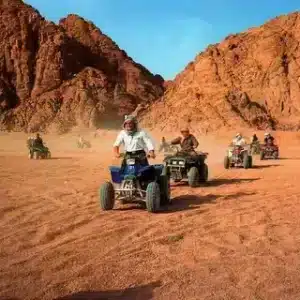
The quad biking portion usually spans 45 minutes to an hour, though some tours offer extended riding time. You’ll follow experienced guides through diverse terrain including flat desert plains, rolling sand dunes, rocky paths, and dry wadis (valleys). The route showcases the desert’s varied landscapes while providing appropriate challenges for riders of different skill levels. Guides set a moderate pace that allows everyone to keep up while still experiencing the thrill of off-road riding.
Most tours include stops at scenic viewpoints where you can dismount, take photographs, and appreciate the vast desert panorama. These breaks also allow riders to rest, hydrate, and adjust to the physical demands of controlling a quad bike over uneven terrain. The guides use these opportunities to share information about the desert ecosystem, geological features, and the region’s history.
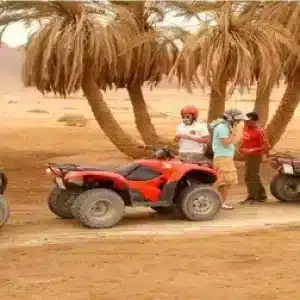
The visit to a Bedouin village forms the cultural heart of most desert safaris. Here you’ll meet local Bedouin people who maintain traditional desert lifestyles while adapting to the modern tourism industry. The welcome typically includes traditional mint tea, a symbol of hospitality throughout the Middle East. Your hosts may demonstrate bread-making in sand ovens, explain traditional crafts like weaving and jewelry-making, and share insights into their nomadic heritage and current way of life.
Camel riding experiences range from brief photo opportunities to extended rides across the dunes. Camels, called “ships of the desert,” have transported people and goods across these lands for millennia. Riding these gentle giants offers a completely different perspective on the desert compared to the speed and noise of quad bikes. The swaying motion and elevated position provide unique photo angles and a connection to the ancient traditions of desert travel.
As sunset approaches, guides position the group at optimal viewing locations to witness the sun’s descent behind the desert mountains. This magical time, when the harsh desert light softens into golden glow, creates some of the most stunning photographic opportunities of your entire Egypt trip. The silence of the desert at this hour, broken only by gentle breezes and distant sounds, creates a profound sense of peace and connection with the natural world.
Tours that include dinner serve traditional Bedouin cuisine—grilled meats, rice dishes, salads, and flatbread cooked in traditional ways. The meal becomes a social experience, with travelers from different countries sharing stories around communal tables while enjoying authentic flavors under the desert sky. After dinner, many tours include entertainment such as traditional music performances, folk dances like the Tanoura (spinning dance), or fire shows that add excitement to the evening.
Stargazing in the desert offers views impossible in light-polluted cities. The clear, dry air and absence of artificial light create conditions where the Milky Way appears as a glowing band across the sky, and shooting stars frequently streak overhead. Many guides point out constellations and share astronomical knowledge, connecting the ancient desert dwellers’ reliance on stars for navigation to modern appreciation of the cosmos.
The return journey to Hurghada usually occurs after sunset for half-day tours or the following morning for overnight experiences. Most tours conclude with hotel drop-off by late evening, leaving you with sand in your shoes, amazing photos, and incredible memories of your desert adventure.
Quad Biking in the Hurghada Desert
Quad biking represents the highlight of most desert safari experiences, offering an exhilarating way to explore the Eastern Desert’s diverse terrain. These powerful four-wheeled all-terrain vehicles provide the perfect balance of accessibility for beginners and excitement for experienced riders.
Modern quad bikes used in Hurghada desert tours feature automatic transmissions, making them remarkably easy to operate even for first-time riders. The basic controls include a throttle on the right handlebar, brakes on both handlebars, and minimal complexity beyond these essentials. Most people master the fundamentals within minutes during the practice session before the actual safari begins.
Safety equipment provided typically includes helmets and sometimes protective eyewear, though many experienced riders prefer bringing their own gear for better fit and comfort. The desert environment presents specific safety considerations—loose sand requires different handling than solid ground, visibility can be reduced by dust kicked up by other riders, and the intense sun creates dehydration risks that affect concentration and reaction time.
The riding routes selected by professional tour operators balance excitement with safety, taking groups through varied terrain that showcases the desert’s beauty while remaining appropriate for mixed-ability groups. You’ll navigate soft sand dunes where the quad’s power and momentum create thrilling climbs and descents, cruise across hard-packed desert flats where you can open the throttle and feel the wind in your face, and wind through rocky areas that demand more technical control and concentration.
The physical demands of quad biking surprise many first-time riders. Maintaining control over uneven terrain engages your core muscles, arms, and legs more than anticipated. The combination of vibration, sun exposure, and concentration can be tiring, particularly for those unaccustomed to physical activity or off-road riding. However, most people find the adrenaline and excitement more than compensate for any physical discomfort.See also.
Experienced guides lead the convoy, setting an appropriate pace and choosing routes based on the group’s overall ability level. They monitor all riders, stopping to assist anyone struggling with their vehicle or the terrain. Guides communicate through hand signals since engine noise makes verbal communication difficult during rides. These signals indicate speed changes, upcoming turns, hazards, and stops, forming a simple but effective communication system.
Photography during quad biking presents challenges since you need both hands for vehicle control. Most riders capture action shots during breaks when everyone stops at scenic viewpoints. Some tours offer photographer services where a staff member follows the group and captures action photos available for purchase after the tour. Alternatively, securing a camera to your helmet or chest with appropriate mounts allows hands-free recording, though you should ensure equipment is properly protected from dust and impacts.
Environmental considerations have become increasingly important as quad biking’s popularity has grown. Responsible operators stick to established routes to minimize ecological damage, avoid disturbing wildlife, and educate riders about protecting the fragile desert ecosystem. The desert may appear barren, but it supports specialized plants and animals adapted to harsh conditions, and these species deserve respect and protection from tourism impacts.
Bedouin Culture and Village Experiences
The Bedouin component of desert safaris provides cultural depth that transforms a simple adventure tour into an educational and emotionally resonant experience. The Bedouin people, whose name derives from the Arabic word “badawi” meaning “desert dweller,” have inhabited these lands for thousands of years, developing remarkable adaptations to one of Earth’s harshest environments.
Traditional Bedouin lifestyle centers on nomadic pastoralism—moving with herds of goats, sheep, and camels to find grazing areas and water sources. While many Bedouin families have adopted semi-settled lifestyles in recent decades, they maintain strong connections to their cultural heritage, traditional knowledge, and desert-adapted customs that safari visitors find fascinating and inspiring.
The Bedouin villages visited during safaris represent a blend of traditional and modern elements. You’ll see traditional low-profile tents made from woven goat hair that provide surprisingly effective insulation against both heat and cold, alongside more permanent structures built from local stone and modern materials. This architectural evolution reflects the Bedouin people’s pragmatic approach to life—honoring tradition while embracing beneficial innovations.
Bedouin hospitality, a sacred cultural value, ensures guests receive warm welcomes regardless of their background or status. The offering of tea or coffee represents this hospitality tradition, with the preparation and serving following specific customs that have been maintained for generations. Accepting these offerings shows respect for your hosts and creates opportunities for authentic cultural exchange beyond typical tourist transactions.
Traditional crafts demonstrated during village visits showcase skills passed down through generations. Women often demonstrate weaving techniques used to create the fabric for tents, rugs, and textiles using simple looms and natural fibers. Jewelry-making using silver and semi-precious stones reflects Bedouin aesthetic preferences and holds cultural significance, with certain pieces indicating tribal affiliation, marital status, or social position.
Bread-making in sand ovens demonstrates ingenious adaptation to desert conditions. The baker builds a fire in a shallow pit, allowing it to burn down to hot coals. Dough is then pressed against the oven’s hot interior walls or cooked directly on heated stones, emerging as flatbread with a distinctive flavor and texture. Watching this ancient technique connects you to countless generations who survived in the desert using the same methods.
Stories and oral traditions shared by Bedouin hosts provide insights into desert survival knowledge, medicinal plant uses, navigation by stars, weather prediction, and the deep spiritual connection to the land that characterizes Bedouin worldview. While language barriers may limit direct communication, guides translate key concepts, and the universal language of gesture and expression conveys much of the meaning and emotion.
Modern Bedouin life balances traditional values with contemporary realities. Many families now send children to schools, use mobile phones and solar panels, and participate in the tourism economy while maintaining cultural identity and connection to ancestral lands. Understanding this evolution helps visitors appreciate that Bedouin culture is living and dynamic, not a museum piece frozen in time.
Responsible cultural tourism means treating Bedouin hosts with respect, asking permission before photographing people (especially women), dressing modestly, accepting offered hospitality graciously, and purchasing crafts directly from artisans when appropriate. These practices ensure your visit benefits local communities economically while preserving cultural dignity and authenticity.
Desert Landscapes and Natural Beauty
The Eastern Desert surrounding Hurghada presents landscapes of stark, compelling beauty that contrast dramatically with the lush marine environments of the nearby Red Sea. Understanding the geological and ecological characteristics of this environment enhances your appreciation during safari experiences.
The Eastern Desert forms part of the Sahara Desert system, the world’s largest hot desert. This region sits between the Nile Valley and the Red Sea coast, characterized by a combination of sand dunes, gravel plains, rocky plateaus, and dramatic mountain ranges that reach elevations exceeding 2,000 meters in some areas. The geological history stretches back hundreds of millions of years, with exposed rock formations revealing Earth’s ancient past.
Sand dunes, the iconic desert landscape feature, form through wind action over long time periods. The dunes around Hurghada range from small ripples to substantial formations several meters high. Their shapes constantly shift with prevailing winds, creating an ever-changing landscape. The sand’s golden color comes from mineral content, primarily quartz with iron oxide giving it warm tones that intensify during sunrise and sunset.
Rocky desert terrain reveals the underlying geology—ancient metamorphic and igneous rocks shaped by tectonic forces and weathered by millions of years of wind, rare rains, and temperature extremes. These areas often display dramatic colors ranging from black volcanic rocks to red iron-rich formations and white limestone deposits. Dry wadis (valleys) cut through the landscape, carved by flash floods that occur during infrequent but intense rainstorms.
Despite appearing lifeless, the desert supports specially adapted flora and fauna. Drought-resistant plants like acacia trees, salt-tolerant shrubs, and various herbs survive by developing deep root systems, reduced leaf surfaces to minimize water loss, and the ability to remain dormant during dry periods. These plants provide food and shelter for desert animals including gazelles, foxes, reptiles, and numerous bird species.
The desert’s extreme temperature variations surprise many visitors. Daytime temperatures can exceed 40°C (104°F) during summer months, while winter nights occasionally drop near freezing. This dramatic daily temperature swing results from the dry air’s inability to retain heat once the sun sets. Desert organisms have evolved remarkable adaptations to survive these extremes, with many animals active only during cooler morning and evening hours.
Light in the desert possesses unique qualities that photographers cherish. The clear, dry air provides exceptional visibility, allowing views of distant mountains and landscapes dozens of kilometers away. The low angle of sunrise and sunset light creates long shadows and warm tones that transform ordinary scenes into spectacular visual experiences. Midday light, while harsh, emphasizes textures and creates stark contrasts that work well for certain photographic styles.
The silence and vastness of the desert create psychological impacts many visitors find profound. Standing in the middle of seemingly endless emptiness, with no human sounds except your own breathing and heartbeat, provides perspective on human scale and our place in the natural world. This experience of solitude and space becomes increasingly rare in our crowded, noisy modern world, making it particularly valuable for many travelers.
Best Time for Desert Safari in Hurghada
Timing your desert safari significantly impacts comfort levels, visibility, and overall enjoyment. While tours operate year-round, certain seasons and times of day offer distinct advantages that help you plan the optimal experience.
Seasonal Considerations:
The cooler months from October through April represent the ideal season for desert safaris. During this period, daytime temperatures range from pleasantly warm 20-25°C to moderately hot 30-35°C, making outdoor activities comfortable without the extreme heat of summer. Evenings and early mornings can be surprisingly cool, sometimes requiring light jackets, but this coolness provides welcome relief and creates comfortable conditions for dining and entertainment at Bedouin camps.
Summer months from May through September bring intense heat with temperatures regularly exceeding 40°C (104°F) and occasionally reaching 45°C or higher. These conditions make daytime desert activities extremely challenging and potentially dangerous for those unaccustomed to extreme heat. However, summer offers advantages including significantly lower prices, fewer tourists, and spectacular clear skies. If visiting during summer, choose early morning or sunset tours that minimize midday exposure, drink excessive amounts of water, and be honest about your heat tolerance.
Daily Timing:
Sunrise safaris, departing your hotel around 4:00-5:00 AM, offer the desert at its most beautiful and comfortable. The soft morning light creates stunning photography conditions, temperatures remain cool, and you’ll experience the desert awakening—birds becoming active, light gradually revealing landscape details, and the sense of witnessing something special. However, the very early start deters some visitors, and morning tours typically don’t include the cultural components of later tours.
Midday tours generally offer the lowest prices but present the greatest physical challenges due to heat and harsh light. These tours work best during winter months when midday temperatures remain moderate. The bright light creates strong contrasts and washes out colors, making photography less rewarding than golden hour options.
Afternoon/sunset safaris represent the most popular option, combining comfortable temperatures, spectacular lighting, and comprehensive cultural experiences. Departing around 2:00-3:00 PM, these tours allow quad biking in moderate heat, followed by cultural activities and dinner as temperatures cool, culminating in breathtaking sunsets. The timing works well with typical tourist schedules, allowing morning beach time before the afternoon desert adventure.
Evening tours focusing on dinner and stargazing avoid desert activities during daylight entirely, instead transporting visitors to Bedouin camps for cultural experiences after sunset. These tours suit families with young children, elderly travelers, or anyone who wants the cultural aspects without the physical demands of quad biking or extreme heat exposure.
Special Events and Holidays:
During Ramadan, the Islamic holy month of fasting, tour schedules and dinner components may be adjusted. While tours continue operating, some Bedouin staff members fast from sunrise to sunset, and evening meals may be timed around breaking the fast. Most operators handle these logistics smoothly, but awareness helps set appropriate expectations.
Egyptian holidays and school vacation periods (particularly July-August and mid-year breaks) can bring increased domestic tourism, potentially affecting availability and crowd sizes. Booking in advance becomes even more important during these periods.
What to Wear and Pack for Desert Safari
Proper preparation ensures comfort and safety during your desert adventure. The desert environment presents unique challenges that require thoughtful planning regarding clothing, equipment, and supplies.
Clothing Essentials:
Lightweight, loose-fitting clothing in light colors provides the best protection against desert heat. Cotton and linen fabrics breathe better than synthetics, though modern moisture-wicking athletic fabrics also work well. Long sleeves and pants offer superior sun protection compared to shorts and tank tops, despite feeling counterintuitive in hot weather. Many desert-dwelling cultures favor full coverage precisely because it provides better protection than exposed skin.
Closed-toe shoes are absolutely essential for quad biking and desert walking. Athletic shoes or hiking boots with good tread provide ankle support and protection from hot sand, sharp rocks, and potential encounters with thorny plants or hidden scorpions. Avoid flip-flops, sandals, or any open-toed footwear regardless of how casual the tour seems.
A light jacket or long-sleeved shirt becomes necessary during winter months and for any tour extending into evening hours. Desert temperatures can drop dramatically after sunset, and the combination of cooling air and wind from vehicle movement creates surprisingly chilly conditions.
Head covering is crucial—a baseball cap, wide-brimmed hat, or traditional scarf (keffiyeh) protects against sun exposure and blowing sand. Hats should fit securely enough to stay on during quad biking, or you should have a way to secure them. Many experienced desert travelers favor the traditional Arab keffiyeh, which can be wrapped various ways to protect the head, neck, and face.
Essential Items:
Sunscreen with high SPF should be applied generously before departure and reapplied throughout the day. The desert sun is particularly intense due to reflection from sand and lack of shade. Don’t forget often-overlooked areas like ears, neck, back of hands, and any exposed skin around ankles.
Sunglasses with UV protection shield your eyes from intense light and windblown sand. Wraparound styles provide better coverage than standard glasses, and securing them with a strap prevents loss during active portions of the tour.
A scarf or bandana serves multiple purposes—protecting your neck from sun, covering your mouth and nose during dusty conditions, and providing a layer of warmth during cooler periods. These simple pieces of fabric prove invaluable in desert environments.
Water bottles should be brought even though tours typically provide water. Having your own supply ensures constant access to hydration, particularly important during hot weather when dehydration develops rapidly. Insulated bottles keep water cooler longer in desert heat.
Camera equipment requires protection from sand and dust. Bring plastic bags or protective covers for cameras, and avoid changing lenses in dusty conditions. Memory cards with ample capacity ensure you don’t run out of space during spectacular photo opportunities. Fully charged batteries or portable power banks keep equipment operational throughout the tour.
Small amounts of cash for tipping guides and purchasing crafts from Bedouin artisans should be readily accessible. Egyptian pounds in small denominations work best, though US dollars are often accepted in tourist contexts.
Items to Leave Behind:
Valuable jewelry, expensive watches, and unnecessary valuables should stay at your hotel. The desert environment and active nature of safaris create risks of loss or damage. Similarly, important documents beyond basic ID can safely remain in your hotel safe.
White or very light-colored clothing shows every speck of desert dust and sand. While light colors reflect heat well, practical considerations favor tan, khaki, or other colors that camouflage inevitable dirt and stains.
Desert Safari Prices and Booking Tips
Understanding the cost structure and booking process for Hurghada desert safaris helps you find the best value while ensuring a quality experience. Prices vary significantly based on tour type, inclusions, group size, and booking method.
Price Ranges:
Standard group quad biking safaris typically range from $20-40 per person for basic packages including hotel transfers, quad bike rental, Bedouin village visit, and tea. These budget options usually involve larger groups (15-20 people), basic equipment, and minimal extras beyond the core activities.
Mid-range tours priced $40-70 per person offer better value for most travelers, including smaller groups, longer quad biking time, full dinner at Bedouin camps, cultural entertainment, and sometimes additional activities like camel rides or stargazing. The improved guide-to-guest ratio and enhanced inclusions justify the higher cost for many visitors.
Premium and private safaris start around $80-100 per person and can exceed $200 for luxury experiences. These include private guides, customized itineraries, superior dining, professional photography services, and exclusive cultural interactions. Private tours for couples or families provide the ultimate flexibility and personalization.
Overnight desert camping experiences range from $100-250 per person depending on comfort levels, inclusions, and group size. Luxury overnight safaris with premium bedding, gourmet meals, and extensive activities command the highest prices but deliver exceptional experiences.
Children typically receive discounts of 25-50%, with specific age policies varying by operator. Some tours set minimum age requirements for quad biking (often 16 for independent riding, though younger children can ride as passengers with adults).
What’s Typically Included:
Most desert safari packages include round-trip hotel transfers from Hurghada accommodations, though hotels in distant areas like Makadi Bay or El Gouna may incur surcharges. Transportation usually involves comfortable air-conditioned buses or vans.
Quad bike rental, helmets, and basic safety equipment come standard with quad biking tours. Fuel for the bikes is included, eliminating concerns about additional charges for longer rides.
Guide services including safety briefings, route leading, and cultural interpretation form essential tour components. English-speaking guides are standard, with some operators offering additional languages like German, Russian, or Italian.
Refreshments typically include bottled water during activities and traditional tea at Bedouin villages. Fuller meal inclusions (lunch or dinner) depend on the specific package booked.
Booking Strategies:
Book directly with established local operators to get the best prices while ensuring quality and safety standards. Research operators through TripAdvisor, Google reviews, and travel forums to identify reputable companies with consistent positive feedback.
Avoid booking through hotel concierges or travel agency intermediaries who typically add 30-50% markup to prices. While convenient, these channels significantly increase costs without providing additional value.
Ask detailed questions before booking: exact tour duration, specific inclusions and exclusions, group size limits, cancellation policies, insurance coverage, and safety measures. Reputable operators answer these questions transparently and provide written confirmations.
Read cancellation policies carefully, particularly regarding weather cancellations and customer-initiated changes. Most operators offer full refunds or rescheduling for weather-related cancellations but charge fees for customer cancellations, especially those made close to the tour date.
Book at least 24-48 hours in advance during peak season (October-April) to ensure availability. Last-minute bookings may be possible during slower periods but risk disappointment if tours are full.
Hidden Costs to Watch For:
Some budget tours exclude key elements like dinner, camel rides, or cultural entertainment, requiring additional payments on-site. Carefully review what’s included to avoid unexpected expenses.
Photography services where staff photographers capture action shots often incur additional charges of $10-30 for digital files or prints. While optional, the sales pitches can feel pressuring.
Tips for guides, drivers, and Bedouin hosts are expected but not always clearly communicated. Budget $5-10 in tips depending on group size and service quality.
Optional extras like traditional costume rentals, henna painting, or premium beverage packages add to base costs. Know what’s included in your package and what requires additional payment.
Safety Considerations and Health Tips
Desert environments present specific safety and health considerations that require awareness and preparation. Understanding these risks and taking appropriate precautions ensures your safari remains enjoyable and incident-free.
Heat-Related Concerns:
Dehydration develops rapidly in desert heat, particularly during physical activities like quad biking. Drink water continuously throughout the tour, not just when thirsty, as thirst indicates existing dehydration. Symptoms including headache, dizziness, fatigue, and reduced urination signal insufficient fluid intake.
Heat exhaustion and heat stroke represent serious medical emergencies that can develop quickly in vulnerable individuals. Warning signs include excessive sweating followed by lack of sweating, confusion, rapid heartbeat, and nausea. Anyone showing these symptoms needs immediate cooling, hydration, and potentially medical attention.
Sun exposure causes sunburn surprisingly quickly in the desert where there’s no shade and UV radiation reflects off sand. Apply broad-spectrum sunscreen liberally before the tour and reapply every two hours, more frequently if sweating heavily. Cover exposed skin with clothing rather than relying solely on sunscreen.
Quad Biking Safety:
Follow all guide instructions regarding speed, route, and formation riding. Most accidents result from riders exceeding their abilities, ignoring guide directions, or taking unnecessary risks to show off.
Maintain safe distance from other riders to avoid collisions and reduce dust inhalation from vehicles ahead. If you fall behind, don’t panic—guides monitor all riders and will stop to assist or adjust pace.
Wear provided safety equipment including helmets properly fastened. While helmets may feel uncomfortable in heat, they provide crucial protection in the event of crashes or rollovers.
Know your limits and communicate concerns to guides. There’s no shame in requesting slower pace, additional breaks, or even returning to base early if you’re uncomfortable or exhausted. Your safety and enjoyment matter more than completing every element of the tour.
Environmental Hazards:
Scorpions and snakes inhabit desert environments, though encounters during tours are rare since these creatures avoid humans and daytime heat. Wear closed-toe shoes, avoid putting hands in dark crevices or under rocks, and shake out shoes and clothing before dressing.
Sandstorms, while infrequent, can develop rapidly. If caught in blowing sand, cover your mouth and nose with a scarf, protect your eyes, and follow guide instructions. Professional operators monitor weather and cancel tours when dangerous conditions are forecast.
Flash floods present serious danger in wadis (dry valleys) during and after rainstorms. Never camp or linger in low-lying areas if rain threatens, as flash floods can appear suddenly from storms occurring far upstream.
Medical Preparedness:
Bring any necessary prescription medications in original containers with adequate supplies for your entire trip plus extra days in case of delays. Common medications for motion sickness, headaches, and upset stomachs prove helpful.
Travel insurance covering medical emergencies and evacuation provides crucial protection. Desert locations can be remote, and emergency medical evacuation by helicopter or ambulance costs tens of thousands of dollars without insurance.
Inform guides of any medical conditions, allergies, or physical limitations during booking and again at the tour briefing. Reputable operators need this information to ensure your safety and make appropriate accommodations.
Photography Tips for Desert Safari
The desert environment offers spectacular photography opportunities but also presents unique challenges. Understanding how to work with desert light, landscapes, and cultural sensitivity helps you capture stunning images that preserve your safari memories.
Technical Considerations:
Golden hour—the period shortly after sunrise and before sunset—provides the most spectacular light for desert photography. The low-angle sun creates warm tones, long shadows, and dramatic texture in sand dunes and rocky formations. Schedule your safari to include these magical times.
Harsh midday light creates challenges with extreme contrast and washed-out colors. If shooting during these hours, look for subjects where harsh light works—strong geometric shapes, abstract patterns in sand, or black-and-white compositions that embrace high contrast.
Protect equipment from sand and dust by using protective filters on lenses, keeping cameras in bags when not actively shooting, and avoiding lens changes in dusty conditions. Bring microfiber cloths for cleaning but never wipe sandy lenses—blow dust off first to avoid scratching glass.
Composition Strategies:
Include people or vehicles in landscape shots to provide scale that helps viewers understand the immensity of desert spaces. A tiny figure against massive dunes creates more impact than empty dunes alone.
Look for patterns, textures, and leading lines in sand ripples, dune ridges, and rocky formations. These elements create visual interest and draw viewers into images.
Capture action during quad biking by positioning yourself at turns or dune crests where riders appear against sky backgrounds. Ask guides to let you stop ahead of the group to photograph them approaching and passing your position.
Experiment with different perspectives—shooting from low angles emphasizes foreground elements and creates dramatic sky compositions, while elevated positions show sweeping landscape vistas.
Cultural Photography:
Always ask permission before photographing Bedouin people, particularly women. Many appreciate respectful requests and enjoy being photographed, while others prefer privacy for cultural or religious reasons. Respect any declined requests gracefully.
Offer to share photos with subjects after shooting. Showing them images on your camera screen creates connection and often leads to more relaxed, natural subsequent photos.
Purchase items from artisans or accept hospitality before requesting photographs of crafts or activities. This demonstrates respect and ensures your photos represent genuine cultural exchange rather than exploitative taking.
Action and Movement:
Use fast shutter speeds (1/500 second or faster) to freeze quad bike action and avoid motion blur. Increase ISO if needed to maintain fast shutter speeds in lower light.
Experiment with panning—following moving subjects with your camera while shooting at slower shutter speeds (1/60-1/125 second). This technique creates motion blur in backgrounds while keeping subjects relatively sharp, conveying speed and excitement.
Burst mode helps capture peak action moments, particularly during jumps, sharp turns, or expressions of excitement that happen in split seconds.
Conclusion: Your Desert Safari Awaits
A desert safari in Hurghada delivers adventure, culture, and natural beauty in an experience that perfectly complements the Red Sea’s marine attractions. Whether you crave the adrenaline rush of quad biking across dunes, the cultural insights of Bedouin village visits, the romance of desert sunsets, or the serenity of starlit skies, these safaris offer something special for every traveler.
The Eastern Desert’s stark landscapes, ancient traditions, and thrilling activities create memories that rival any experience Egypt offers. The combination of modern adventure tourism and authentic cultural encounters provides unique perspectives on both natural environments and human adaptation to extreme conditions.
From budget-friendly group tours to luxury private experiences, Hurghada’s desert safari operators offer options for every budget and preference. The relatively short distance from coastal hotels makes these tours easy additions to beach-focused vacations, requiring just a few hours to experience a completely different side of Egypt.
As you plan your Hurghada adventure, prioritize at least one desert safari experience. Whether you choose morning rides through cool dunes, sunset tours culminating in spectacular light shows, cultural immersion with Bedouin hosts, or overnight camping under infinite stars, you’ll discover that Egypt’s deserts offer treasures as precious as its famous beaches and ancient monuments.
The desert awaits with its endless horizons, golden sands, and timeless beauty. Book your Hurghada desert safari today and prepare for an adventure


Comment (0)